
Category: Digital Age
-
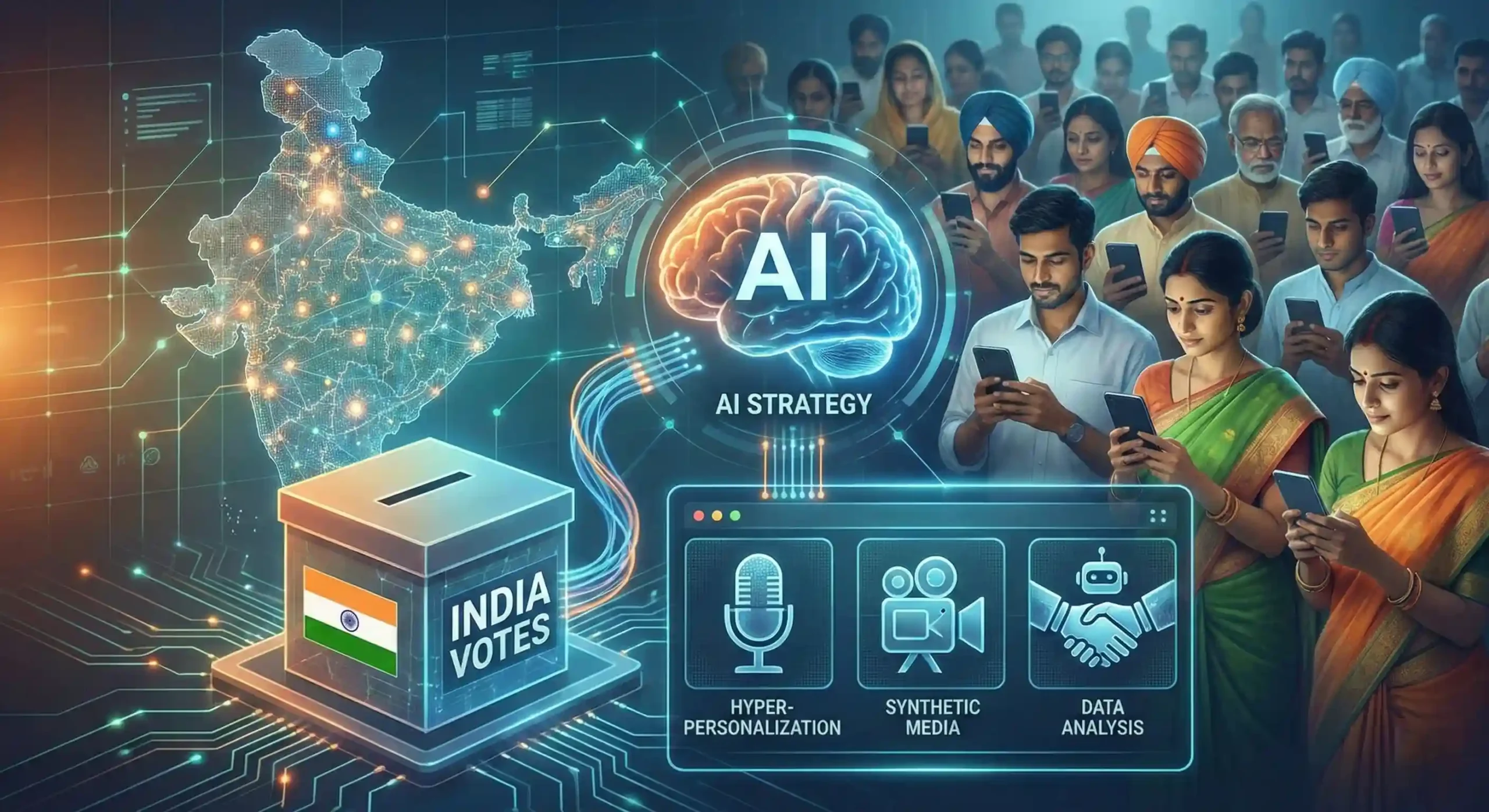
How AI is Redefining Election Strategy in India
AI is quietly powering a ₹5,000–6,000 Cr market for data‑driven campaigning in India. From predictive booth‑level models and micro‑targeted content to multilingual deepfake avatars and real‑time sentiment dashboards. 1. From intuition to intelligence: why AI now dominates Indian campaign strategy India’s 2024 general election and subsequent state contests marked a structural break. AI moved from…
-
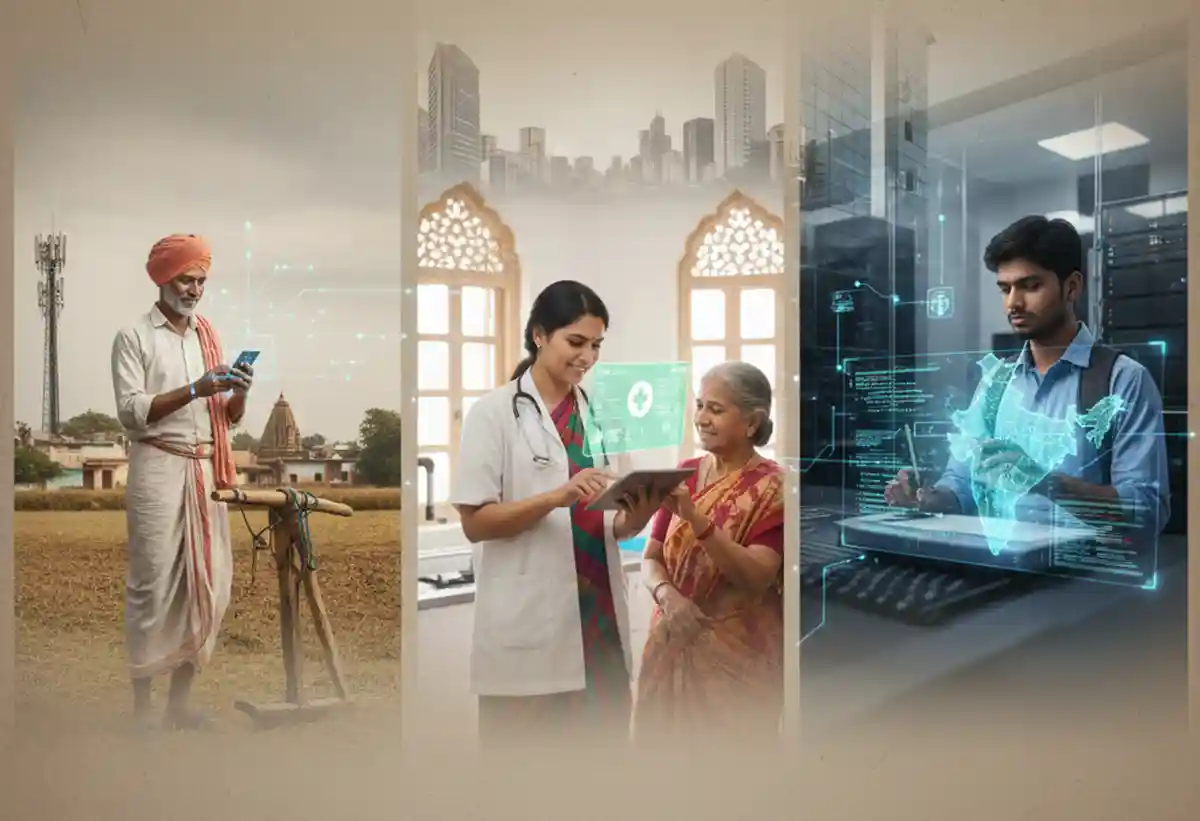
India’s Digital Transformation: A Comprehensive Analysis of Economic Reforms in Digital Infrastructure and AI Integration
India is undergoing a remarkable digital transformation, positioning itself as a global leader in digital governance and artificial intelligence. Through a strategic policy framework and substantial investments in digital public infrastructure (DPI).
-

Complete Analysis: How AI and Data-Driven Political Campaigning are Changing Indian Democracy?
Artificial Intelligence has fundamentally transformed India’s political campaigning landscape, creating a projected $50-60 million market that continues to expand rapidly amid deepening digital penetration. The 2024 general elections marked the definitive inflection point where AI evolved from experimental tool to campaign essential.
-
Join Project Nirbhay: Redefining the Power of Democracy Today
In an age where truth struggles to be heard above the noise, and opinions travel faster than facts, there is an urgent need to reclaim the power of intellect — not as an echo of ideology, but as the voice of reason.
-
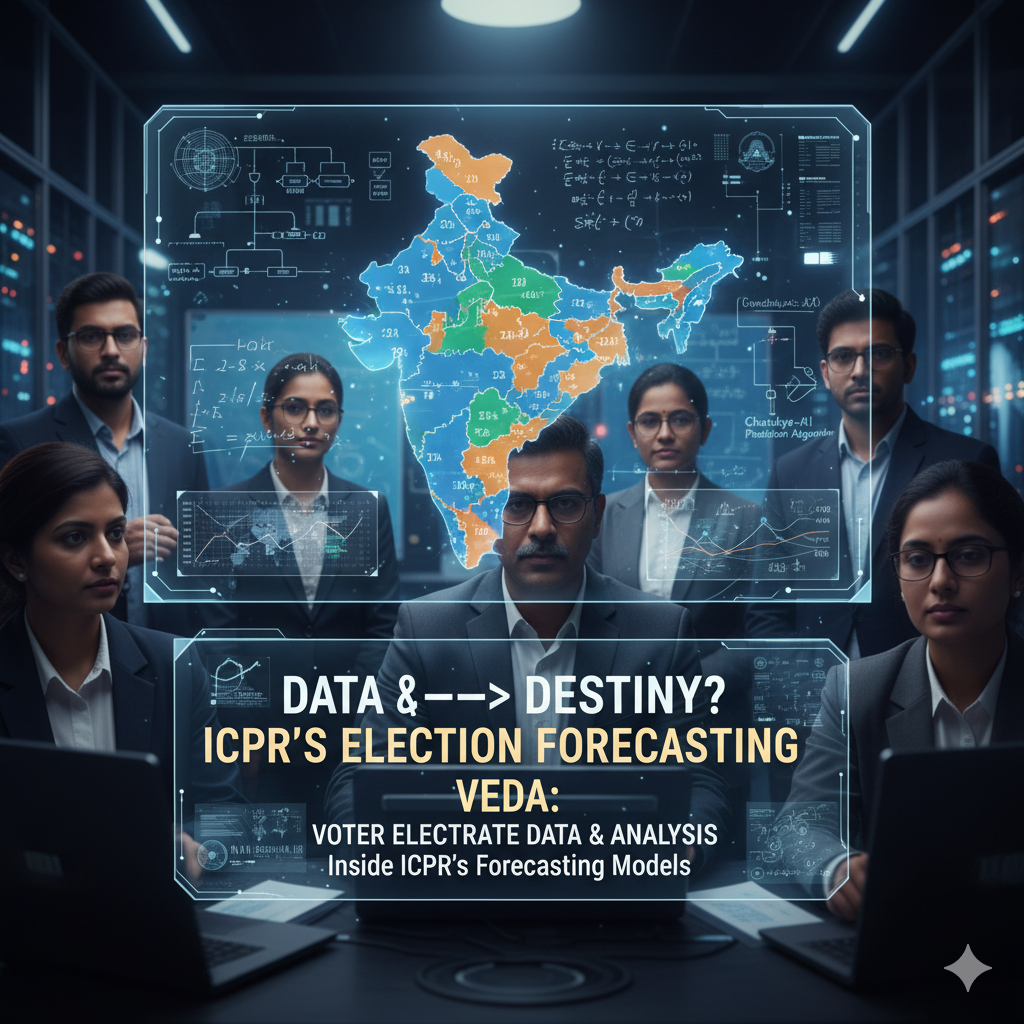
Can Data Predict Elections? Inside ICPR’s Forecasting Models
Introduction Every election season, analysts, anchors, and citizens ask the same question: “Who will win?” For decades, this question was answered through experience, intuition, and anecdotal ground reports. But in the last decade, India’s electoral landscape has become too complex, diverse, and dynamic for guesswork alone. From Bihar to Bengal, from Gujarat to Goa, a…
-
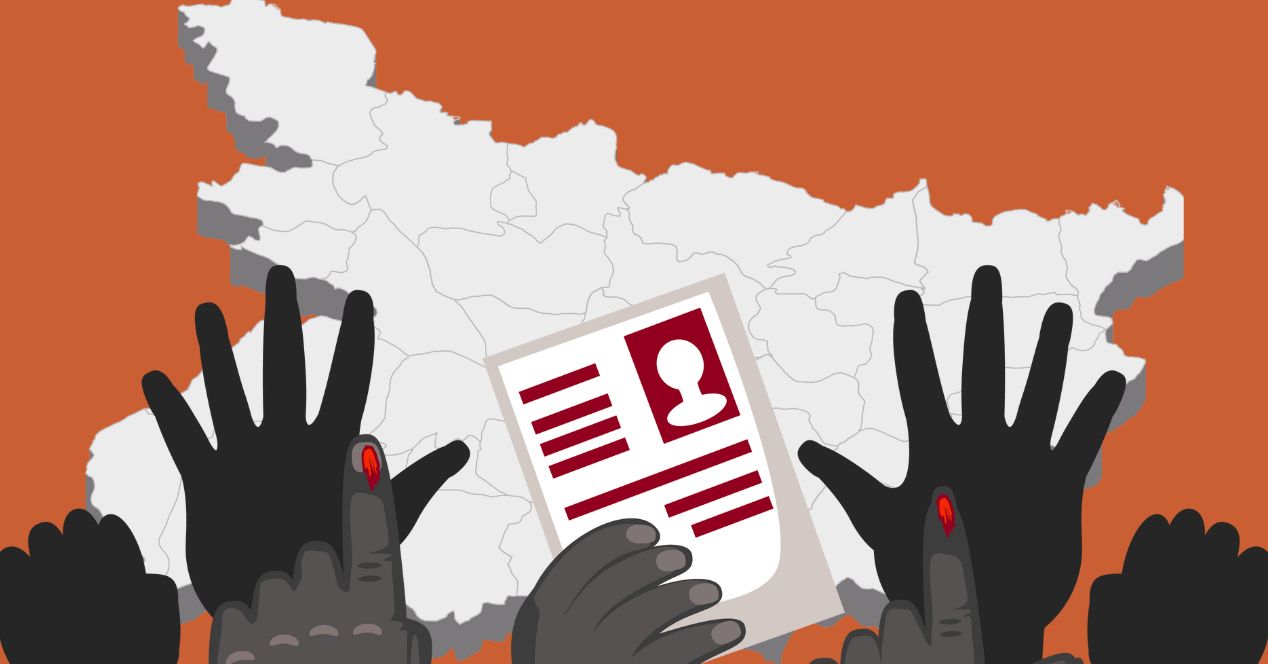
Data and Democracy: How Analytics Is Changing Bihar’s Campaign Playbook
In Bihar, elections are more than contests for votes—they are tests of social structures, caste coalitions, and citizen aspirations. But as we move into 2025, the playbook of Bihar’s political campaigns is undergoing a radical shift. The once intuitive world of electoral politics is being rewritten by **data analytics, machine learning, and micro-targeting**.
-
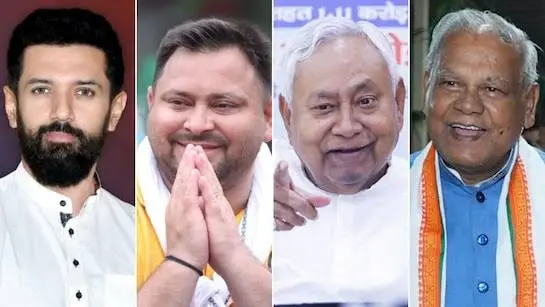
Bihar 2025: Narrative Wars, Voter Voices & Data Trust
Each election is shaped by stories people believe—about development, identity, dignity. In Bihar 2025, those stories face new pressure: from data, technology, and hyper-local demands. As caste calculations give way to youth aspirations, women’s voices, and suspicion over freebies, the party that controls the narrative gains the edge.
-
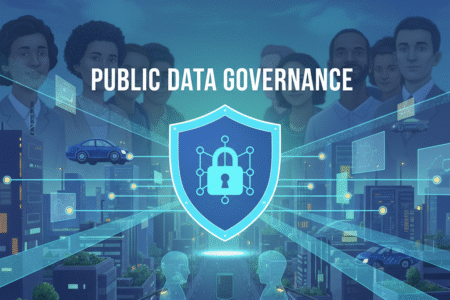
Public Data Governance in Smart Cities | ICPR Insights
Everywhere we look, cities are branding themselves as “smart.” New metro lines come with digital displays, traffic is managed through sensors, and government apps promise seamless service delivery. In India, the Smart Cities Mission has turned this dream into a national project, transforming urban spaces with technology.
-

AI in Electoral Management: Can Algorithms Strengthen Democracy Without Weakening Trust?
Elections are one of the few moments when citizens across social classes, languages, and ideologies come together for a common act: voting. The ballot box is supposed to symbolize equality—every individual has one vote, and every vote counts the same. Yet, behind this symbolism lies a complex web of processes: maintaining accurate voter rolls, ensuring…